
"coffee harvest process"
10000 article(s) found

Varieties of coffee harvested and processed
Coffee is the fruit of a Rubiaceae plant growing about 6000 feet above sea level, distributed on the world's narrow subtropical axis; coffee trees grow green all the year round and can grow up to 20 feet tall, and are generally controlled at 8 to 10 feet for easy harvest. It takes three to five years for the coffee tree to bear fruit. First of all, it produces small white flowers that resemble jasmine in shape and size, and then wither and bear deep fruit.

What is a single producing area coffee beans, a single manor?
[single producing area] most of the coffee in the world comes from the harvest of small farmers in a single area. Farmers in neighboring areas will centrally hand over the harvested fruit to post-processing plants (similar to the concept of peasant associations), which will then be sold by processing plants. The coffee we drink in a single producing area is collected by the processing plant selecting the current harvest and mixing the hard work of dozens of farmers.

The production process of coffee beans A coffee tree can harvest 3 Mel 5 kg of fruit.
A coffee tree can harvest 3-5 kg of fruit, and raw coffee beans account for 1. 5% of the fruit quality. Going from fruit to raw coffee beans is really a time-consuming and laborious task. Arabian, Robusta and Librian Arabian coffee account for about 2% of the world's coffee production. The plant is not suitable for high temperature, low temperature, more rain and less rain. Coffee beans are oval flat and have a high height.

Coffee growth process and production process
The flowers of the coffee tree have a faint fragrance like jasmine. If the temperature difference between day and night and humidity are enough, there will be more flowers. The second and third months of the lunar calendar are its florescence, and its flowers are small white flowers. The flowers withered completely within two days to a week after flowering. As a result, the growth process of coffee will produce green fruit after the flowers fade.
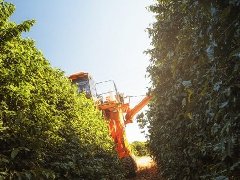
What role can machinery play in the production of boutique coffee?
Professional coffee knowledge exchange more coffee bean information please follow the coffee workshop (Wechat official account cafe_style) sometimes, it is difficult to separate the concept of boutique coffee from handmade and small-scale things. We believe that human knowledge and care can produce some of the best coffee in the world. This is a human hand, not a machine. There is no denying that human hands are superior to production.

A brief introduction to the market price of spicy and unrestrained Kenyan boutique coffee beans
Large coffee processing farms in Kenya usually have independent processing facilities. A large number of small farmers usually pick ripe coffee fruits by hand. Coffee picking is a labor-intensive job that requires the whole family to deploy and even hire workers during the harvest season. The fresh fruits of the picked coffee need to be promptly transported to the cooperative-owned coffee processing plant for pulping and transportation.
Processing of coffee beans after harvest
Coffee beans must be processed immediately after harvest to avoid spoilage. Producers use two treatments: solarization and cleaning. An effective sun-drying method is to spread the berries evenly in the yard and stir the dehydrated berries occasionally to heat and aerate them evenly. The dried berries are then placed in a machine that crushes the outer shell and simultaneously removes the outer shell and the layer of parchment that surrounds it
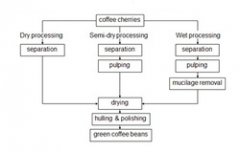
A brief introduction to the general knowledge of fine coffee the processing process of coffee beans
Recently, the harvest of coffee has been fully spread out in Yunnan. I think it's time to pick out some of the blog posts I've posted. I've been planning this for a long time. Almost a year ago, I posted a blog called "Harvest Rewards". It's about several ways to harvest coffee in this area. The coffee fruit should be peeled within 8 hours after picking, otherwise

The harvest date of coffee beans.
From the coffee-producing countries, we can find that since almost all coffee is produced in countries with more cheap labor, it can be guessed that the process of harvesting coffee beans requires a lot of manpower. Yes, the harvesting of coffee is very hard and requires a lot of manpower, especially in many high-quality coffee, which can only pick fully ripe red cherries from coffee trees.

Analysis of the process from coffee tree planting to coffee bean harvest
Coffee trees take 3-5 years from planting to fruiting. 6-10 years of coffee trees are the most likely to bear fruit, about 15-20 years, is the harvest period. Coffee trees are usually bred in nurseries and grow into saplings, and then moved to coffee farms a year later, in full compliance with the way the Arabs planted and cultivated coffee trees. Coffee trees will continue to take root downward and upward in the first four or five years of their growth.

A brief introduction to the description of flavor and aroma characteristics of glossy Kenyan boutique coffee beans
Compared with shading planting in many high-quality producing areas, Kenyan coffee is obviously more spicy and unrestrained, and shade trees are not common. In addition, Kenyan coffee rarely participates in certification, variety and environmental factors make the use of pesticides necessary, and organic certification, which is popular in other countries, becomes rare in Kenya. Kenya coffee harvest season there are two harvest seasons in Kenya, the main harvest
The mode of picking coffee fruit during the harvest period.
Professional coffee knowledge exchange more information about coffee beans Please follow the coffee workshop (Wechat official account cafe_style) depending on the variety, it takes about 3 to 4 years for newly planted coffee trees to bear fruit. The fruit, called coffee cherry, turns bright crimson when it is ripe for harvest. There is usually a bumper harvest every year. In a country like Colombia,

A brief introduction to the treatment method of grinding degree and baking degree of spicy and unrestrained Kenyan boutique coffee beans
Large coffee processing farms in Kenya usually have independent processing facilities. A large number of small farmers usually pick ripe coffee fruits by hand. Coffee picking is a labor-intensive job that requires the whole family to deploy and even hire workers during the harvest season. The fresh fruits of the picked coffee need to be promptly transported to the cooperative-owned coffee processing plant for pulping and transportation.
The harvest of coffee
From the coffee-producing countries, we can find that since almost all coffee is produced in countries with more cheap labor, it can be guessed that the process of harvesting coffee beans requires a lot of manpower.

A brief introduction to the initial processing of coffee beans
Recently, the harvest of coffee has been fully spread out in Yunnan. I think it's time to pick out some of the blog posts I've posted. I've been planning this for a long time. Almost a year ago, I posted a blog called "Harvest Rewards". It's about several ways to harvest coffee in this area. The coffee fruit should be peeled within 8 hours after picking, otherwise

A brief introduction to the treatment method of grinding degree and baking degree of delicious Kenyan boutique coffee beans
Kenya coffee harvest season there are two harvest seasons in Kenya, the main harvest season is from October to December and the secondary harvest season is from May to July. Large coffee processing farms in Kenya usually have independent processing facilities. A large number of small farmers usually pick ripe coffee fruits by hand. Coffee picking is a labor-intensive job, which requires the whole family to go out or even return during the harvest season.

Brazilian Coffee processing Panamanian Manor Coffee beans
When the coffee berries are ripe, they are usually harvested by manual picking. In some places, only the fully ripe berries are picked, while others are all picked from a single branch. The former is called handpicked and the latter is called strip-picking. Because the ripening time of coffee berries is not consistent, the harvest is likely to be divided into several stages.
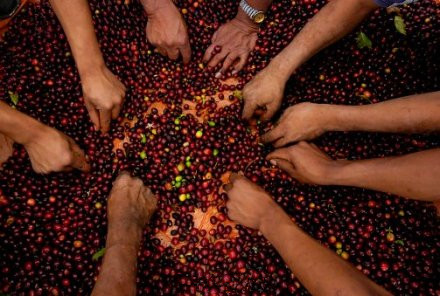
The process of turning fresh coffee fruit into raw coffee beans
The variety of coffee treated with raw beans certainly determines the natural flavor, but the treatment of raw beans determines the acquired quality. Selected coffee attaches great importance to flavor and quality, so it pays special attention to the technology and details of processing. Harvest: the harvest method is one of the criteria for judging selected coffee. if calculated from the time of germination, Arabica coffee will take about 5 years to blossom and bear fruit. Brazil
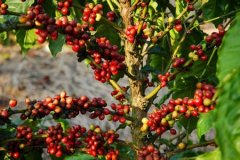
The process from fruit to raw coffee beans from harvest to delivery
A coffee tree can harvest 3-5 kg of fruit, and raw coffee beans account for 1. 5% of the fruit quality. Going from fruit to raw coffee beans is really a time-consuming and laborious task. Arabian, Robusta and Liberian Arabian coffee account for about 2% of the world's coffee production. The plant is not suitable for high temperature, low temperature, more rain and less rain. Coffee beans are oval and flat, with high quality

The process of turning fresh coffee fruits into raw coffee beans.
The variety of coffee treated with raw beans certainly determines the natural flavor, but the treatment of raw beans determines the acquired quality. Selected coffee attaches great importance to flavor and quality, so it pays special attention to the technology and details of processing. Harvest: the harvest method is one of the criteria for judging selected coffee. if calculated from the time of germination, Arabica coffee will take about 5 years to blossom and bear fruit. Brazil